
%20.png)

The operational reality behind Mediterranean summer jet demand
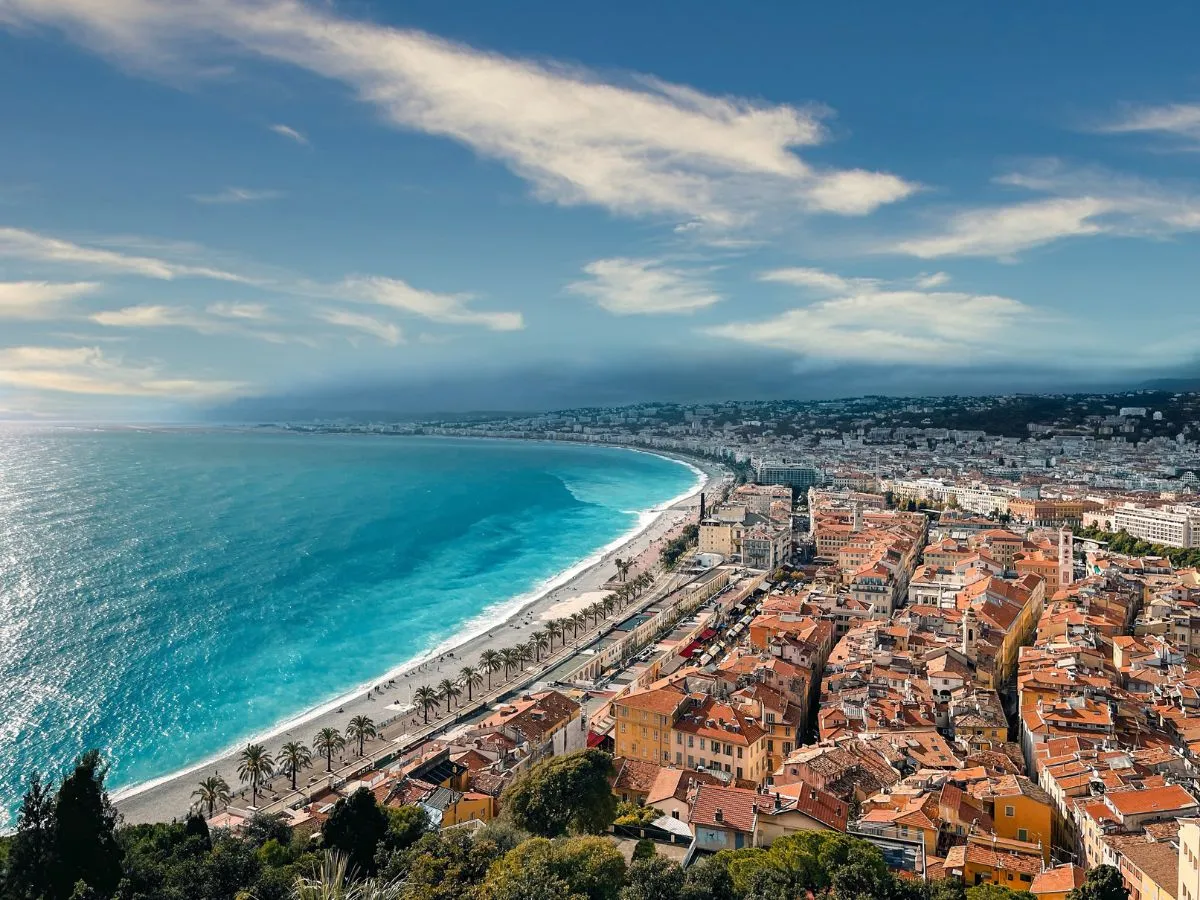
The Mediterranean summer is one of the most demand-intensive periods in private aviation. A relatively small network of coastal and island airports absorbs an enormous volume of traffic over a few months – and the infrastructure serving those destinations has a ceiling.
Understanding why availability tightens, why lead times stretch, and why the same journey that was straightforward in May becomes operationally complex in July comes down to two things: the way demand concentrates into narrow windows, and the fixed nature of the capacity that has to absorb it.
The Demand Problem
The first thing to know is that European private aviation is predominantly leisure-driven. Unlike the US, where business travel distributes demand more evenly across the calendar, European charter traffic is heavily seasonal – and the Mediterranean is where much of that seasonality lands.
To put some numbers on it: at Global Charter, in 2025 we arranged 103% more flights across Europe in July than in February.
In my experience, Mediterranean charter travel skews heavily towards the weekend. Many clients want to arrive Friday, leave Sunday, and spend as little of their trip in transit as possible. That's entirely reasonable. But the result is that most of the market wants to move on the same two days, in the same direction, at roughly the same time. Friday lunchtime arrivals, Sunday evening departures. By July and August, every operator with an aircraft in range is working those windows simultaneously.
What makes this demand even more challenging is that it concentrates into the same hotspots. Looking at our bookings for this summer, 45% of our European charters run through just four airports – Nice, Ibiza, Palma and Mykonos. Factor in smaller airports in Cannes and St Tropez, and that rises to 54% – more than half of all European summer demand concentrated into the same areas.
Where that demand lands at route level
The concentration holds just as tightly at route level. Five city pairs account for the majority of what we arrange into the Mediterranean between May and August. Four of them depart London, which is partly the market and partly us: we are a London-based company, so our numbers lean more towards London departures than the European picture as a whole. The one that doesn't is also our busiest:
- Paris to Nice – Barely more than an hour in the air against most of a day by rail, on a corridor that carries business traffic and second-home owners in roughly equal measure. It is the one route here people fly out of habit rather than for a holiday, which is why it holds up in February as well as August.
- London to Nice – Nice is the door to the entire coast rather than a destination in itself. Most of our clients on this route are heading to Monaco, Cannes or St Tropez, and the appeal is how quickly the second leg follows the first. The event calendar does the rest: the Grand Prix and the film festival move a lot of aircraft between the two cities in a short window.
- London to Ibiza – Scheduled services run heavily in summer but on timings that suit the airline rather than the passenger, and they thin out quickly either side of the peak. Clients on this route are usually travelling as a group and want to land in the evening and leave late, which is where a charter earns its place.
- London to Palma – The most domestic-feeling route on the list. Mallorca has a long-established British second-home population, and much of what we arrange here is families going out on a Friday and back on a Sunday. Luggage, children and short weekends are what make the practicalities worth paying for.
- London to Mykonos – The route where the time saved is largest and most obvious. Direct scheduled options are limited and seasonal, so the alternative is usually a connection through Athens and most of a day gone. Flying direct turns that into an afternoon.
Why capacity can’t keep up
The airports absorbing all of this have a hard physical ceiling. Runways, aprons, handling bays – none of it expands because it's August. The infrastructure that serves a quiet February is the same infrastructure serving a summer that may see three or four times the traffic.
With such levels of demand, these airports are forced to operate on strict slot systems – every arrival and departure needs a confirmed window, and those windows are finite. Ground time is tightly managed too, which matters when you have a high volume of light jets all needing to turn around quickly in the same place on the same afternoon.
And unlike booking a hotel, where availability is visible months out, most of these airports only release slot availability 14 to 15 days in advance. So even a client who plans well ahead hits a hard operational horizon about two weeks before travel – when everyone else is competing for the same windows at the same time.
How We Approach It
By the time most clients are thinking about their summer plans, our Flight Operations team is already working the season. We start flagging potential slot constraints at enquiry stage – not because we expect problems, but because the airports that matter most in summer leave very little room for late decisions. At destinations like Mykonos, maximum ground time is 40 minutes. Athens limits turnarounds to two hours. Naples, two hours in summer. These aren't edge cases – they're standard operating conditions at some of the most requested airports in the region, and they shape how we plan every leg from the outset.
We also stay in active communication through confirmation. Slots are requested, not guaranteed, and updates can land within 48 hours of departure. Clients who've been briefed on this from the start take it in their stride. Those who haven't tend to find it stressful – and that's on us, not the airport.
For clients planning summer travel, the single most useful thing is lead time. Not because early booking guarantees a perfect slot – the 14-day release window means some of that coordination happens regardless – but because it keeps more options open and gives us more room to work. The second most useful thing is a degree of flexibility on timing. Not on destination, not on dates – just a window of an hour or two either side of the preferred departure or arrival. In a constrained system, that small amount of flexibility can be the difference between a straightforward confirmation and a difficult one.
The Mediterranean in summer is worth it. It just rewards those who plan it properly.
Written By : Nathan Woolley, Head of Flight Operations