


How Fast Can Private Jets Fly?
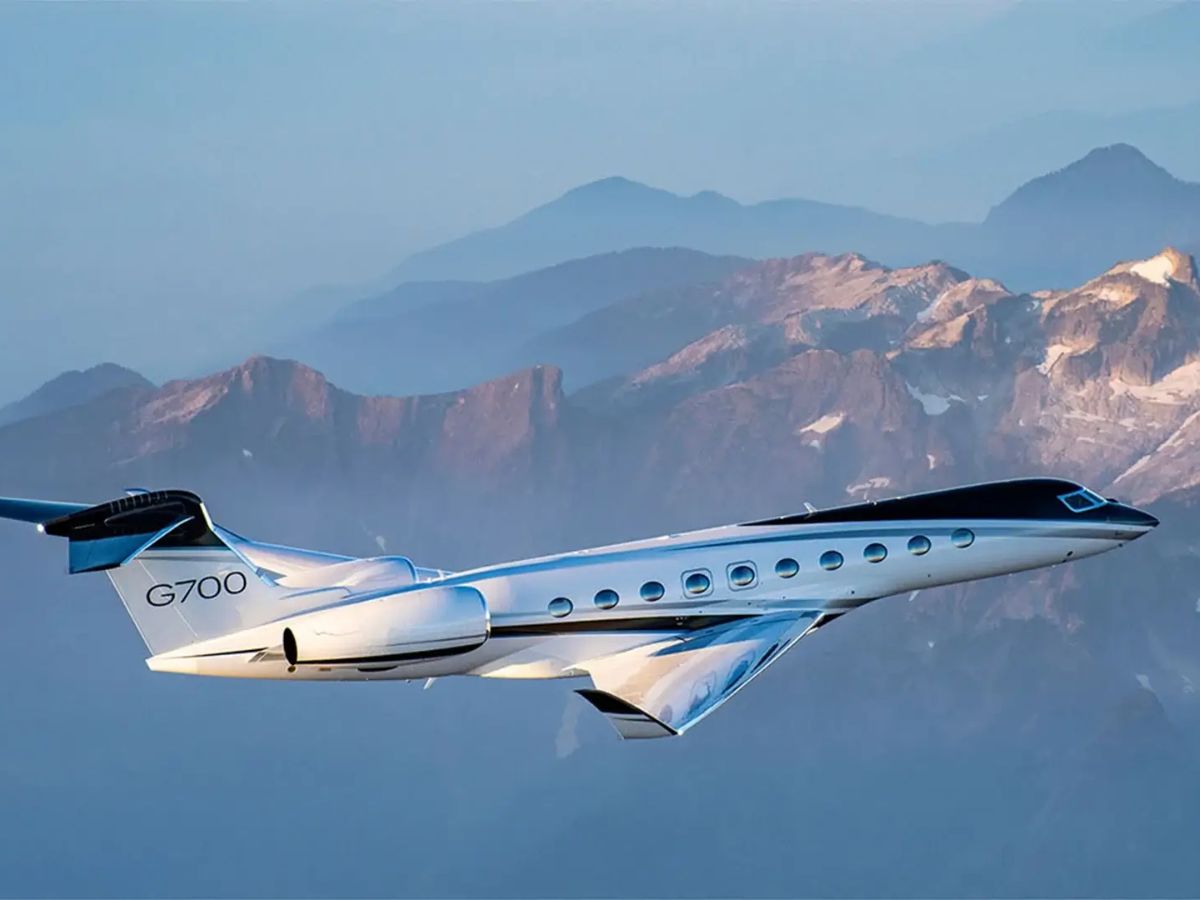
Private jets typically cruise at speeds between 400 and 600 mph (350–520 knots), depending on the aircraft model and flight conditions. Some high-performance business jets can travel considerably faster, operating at speeds approaching the speed of sound.
However, an aircraft's cruising speed is only one factor in how quickly passengers reach their destination. Flight distance, prevailing winds, routing and time spent on the ground all influence the overall journey.
Understanding Private Jet Speeds: Knots, Mach and Ground Speed
Aircraft speed can be expressed in several different ways, each measuring something slightly different. Understanding these distinctions helps explain why a private jet's advertised cruising speed may differ from the speed displayed on a flight tracker.
- Knots (kt): The standard unit of speed in aviation. One knot equals one nautical mile per hour, or approximately 1.15 mph. Aircraft performance specifications commonly use knots.
- Mach number: Measures an aircraft's speed relative to the local speed of sound. Mach 0.85, for example, means the aircraft is travelling at 85% of the speed of sound. The corresponding speed in mph varies with atmospheric temperature.
- Ground speed: Measures how quickly an aircraft travels over the Earth's surface. Unlike true airspeed, it accounts for the effect of wind, so a jet can have a significantly higher ground speed when travelling with a strong tailwind.
This distinction is particularly noticeable on transatlantic flights. A private jet travelling from London to New York typically encounters prevailing westerly winds, which can reduce its ground speed and extend the journey. On the return eastbound flight, those same winds may provide a strong tailwind, allowing the aircraft to achieve a much higher ground speed without flying faster through the surrounding air.
How Fast Are Different Private Jets?
Private jet cruising speeds vary considerably between aircraft models. While smaller jets typically operate at lower speeds, certain aircraft are specifically engineered for high-speed performance, regardless of their size.
The table below compares the published high-speed cruising performance of six private jets, from the light Citation M2 to the ultra-long-range Gulfstream G700 and Bombardier Global 7500.
Figures reflect published maximum or high-speed cruise performance, not typical speeds maintained throughout every flight. Mach 0.90 equates to approximately 516 knots under standard high-altitude conditions. Actual speeds vary with altitude and atmospheric conditions.
The Citation X is a notable exception to the general relationship between aircraft size and speed. Designed specifically for high-speed performance, its published cruising speed exceeds that of many larger, more modern business jets.
It's also important to distinguish cruising speed from maximum operating speed. The Gulfstream G700 and Global 7500 both have published high-speed cruise figures of Mach 0.90, but their maximum permitted operating speeds are Mach 0.935 and Mach 0.925 respectively. These higher figures represent operating limits, not their normal cruising speeds.
For charter flights, the fastest available cruising speed is not always the most suitable. Flying at lower speeds can improve fuel efficiency and extend an aircraft's range, particularly on longer journeys where avoiding a refuelling stop may be more valuable than flying faster.

Are Private Jets Faster Than Commercial Airlines?
Not necessarily. Most commercial airliners cruise at speeds of around Mach 0.78–0.85, comparable to many private jets. Smaller business jets can actually be slower than commercial aircraft, while high-performance models such as the Citation X and Gulfstream G700 are capable of considerably higher speeds.
However, the main time-saving advantage of private aviation often comes from the journey as a whole, rather than the aircraft's cruising speed.
Private jets can depart from smaller airports closer to passengers' starting points and destinations, avoid commercial airline schedules and fly directly between locations that would otherwise require a connection. Shorter check-in and boarding procedures can further reduce the total time spent travelling.
Consequently, a private jet can deliver a significantly shorter door-to-door journey even when its cruising speed is no faster than a commercial airliner's.
How Does Speed Affect Private Jet Flight Times?
An aircraft's cruising speed becomes increasingly important over longer distances, but a faster jet doesn't necessarily deliver proportionate savings in overall flight time.
Consider a private jet charter from New York to Miami, a popular route of approximately 950 nautical miles, typically operating between Teterboro Airport (TEB) and Miami-Opa Locka Executive Airport (OPF).
Times are calculated using published maximum cruising speeds over a direct 950-nautical-mile distance. They exclude climb, descent, winds and air traffic restrictions, and are not actual flight-time estimates.
Despite the Citation X being approximately 19% faster, the theoretical saving is only around 20 minutes. In practice, the difference may be smaller or larger depending on the conditions of the flight.
On longer nonstop journeys, however, the benefits of higher cruising speeds become more substantial. A difference of 80–100 knots sustained over several hours can reduce flight time considerably, particularly on transcontinental or intercontinental routes. For passengers travelling on demanding schedules, arriving 45 minutes or an hour earlier can be a meaningful advantage.
This is particularly relevant to time-sensitive business travel or itineraries involving multiple destinations in a single day, where prioritising aircraft speed may be justified.
When Is a Faster Private Jet Worth It?
When arranging a private charter, speed is considered alongside cabin space, aircraft range, airport suitability and operating costs.
On a journey such as New York to Miami, the Citation XLS+ may offer a more economical solution without sacrificing much time. The Citation X offers greater speed, but whether that advantage justifies the additional cost depends on the client's priorities.
For longer journeys, range can be just as important as speed. An aircraft capable of completing a flight nonstop may arrive sooner than a faster jet requiring a refuelling stop. The best choice is therefore not always the fastest aircraft, but the one most suited to the journey.

Frequently Asked Questions
What Is the Fastest Private Jet in the World?
The Bombardier Global 8000 is the fastest business jet currently in service, with a maximum operating speed of Mach 0.95. This is significantly faster than the normal cruising speed of most private jets. For a closer look at high-performance models, see our guide to the world's fastest private jets.
Can Private Jets Break the Sound Barrier?
Conventional civilian private jets are designed for subsonic flight and do not normally exceed Mach 1, the speed of sound. Even the fastest business jets operate below this threshold. Supersonic flight requires specialised aircraft designs and presents additional technical and regulatory challenges.
Why Do Private Jets Sometimes Fly Faster in One Direction?
Prevailing winds can produce significant differences in ground speed between outbound and return journeys. Strong tailwinds increase an aircraft's speed over the ground, while headwinds reduce it. This is particularly noticeable over the North Atlantic, where the jet stream can substantially influence eastbound and westbound flight times.
Does Flying at a Higher Altitude Make Private Jets Faster?
Not necessarily. Although thinner air at higher altitudes reduces aerodynamic drag, aircraft performance and prevailing winds determine whether this translates into greater speed. The relationship between speed and how high private jets fly varies by aircraft and flight conditions, so climbing higher does not automatically shorten a journey.
Does Flying Faster Reduce a Private Jet's Range?
Generally, yes. Higher cruising speeds usually increase fuel consumption over a given distance, potentially reducing how far a private jet can fly without refuelling. Long-range aircraft often have separate high-speed and long-range cruising settings, allowing pilots to balance journey time against fuel efficiency and nonstop range.