
%20.png)

Les meilleurs jets privés pour les pistes courtes

La première question qu’on nous pose généralement au sujet d’un aérodrome soumis à des restrictions concerne l’avion dont la distance de décollage est la plus courte, comme si le chiffre en tête de liste suffisait à trancher la question. C’est rarement le cas. Les chiffres publiés sont issus d’un ensemble de conditions bien précises, et votre vol ne correspondra pas à celles-ci. Le poids est un facteur déterminant, tout comme ce que l’avion transporte : passagers, bagages et carburant nécessaire pour atteindre la destination sans escale technique. Ajoutez à cela la chaleur, l’altitude, une piste non revêtue ou mouillée, ou encore une longue étape suivante, et la liste des avions éligibles peut changer du tout au tout.
Voici les appareils qui ont tendance à bien se comporter sur les pistes plus courtes. Aucun d’entre eux ne permet de déterminer si un aéroport donné est praticable sur la seule base d’un chiffre publié. Pour cela, il faut analyser les données de performance spécifiques au vol que vous vous apprêtez à effectuer.
Quels sont les jets privés les mieux adaptés aux pistes courtes ?
Les avions ci-dessous opèrent tous à une altitude inférieure à 1 000 m, et le plus court d'entre eux nécessite un peu plus de 600 m. Ils sont classés par longueur de piste équilibrée à la masse maximale au décollage ; ainsi, le numéro un est celui qui nécessite la piste la plus courte.
Cette liste n'est pas exhaustive. Les modèles Citation M2, CJ2+, CJ3+, Mustang et XLS offrent tous un confort optimal dans un rayon d'environ un kilomètre, et nous les proposons régulièrement. Ce sont les appareils qui reviennent le plus souvent lorsque c'est la longueur de piste qui est déterminante, plutôt que l'espace en cabine ou le prix.
Ce que ces chiffres supposent
La longueur de piste équilibrée est une mesure de décollage effectuée à la masse maximale, sur une piste revêtue et plane, dans des conditions standard au niveau de la mer.
La question du poids est à double tranchant, et c'est la raison pour laquelle une distance publiée est souvent inférieure à ce qu'elle laisse paraître. Un avion décolle rarement à pleine charge ; ainsi, un nombre réduit de passagers et une quantité de carburant adaptée à l'étape plutôt qu'à un vol long-courrier peuvent réduire considérablement la distance, et plusieurs des appareils ci-dessous décollent de pistes plus courtes que la distance indiquée en regard de leur nom. Chargé à pleine capacité, ce même avion a besoin de chaque mètre, voire parfois davantage. La chaleur et l’altitude augmentent les exigences et se renforcent mutuellement. La surface allonge la course sur l’herbe ou le gravier, tandis qu’une pente ascendante réduit la longueur effective dont on dispose.

1. Cirrus Vision Jet SF50
Longueur approximative du champ équilibré : 610 m
Le Vision Jet est le jet de série qui nécessite la piste la plus courte. Quatre passagers au maximum, des bagages limités et des trajets de deux heures ou moins : il s'agit donc d'une solution spécifique plutôt que d'une solution générale. Ses performances au sol ne lui permettent pas non plus de contourner les règles d'accès, et il ne figure pas parmi les types certifiés pour les aérodromes à accès restreint mentionnés plus bas dans cette liste.
2. Pilatus PC-12
Longueur approximative du champ équilibré : 780 m
Le PC-12 est un turbopropulseur monomoteur pouvant accueillir six à huit passagers, homologué pour atterrir sur des pistes en herbe et en gravier. Pressurisé, suffisamment rapide pour rendre un vol de deux heures confortable, et doté d’une cabine qui ne passe pas inaperçue auprès des clients : c’est beaucoup pour un avion nécessitant moins de 800 m de piste.
Saint-Barthélemy en est l’exemple le plus frappant. La piste mesure 646 m ; l’approche se fait par-dessus la crête du Col de la Tourmente et l’accès est réservé aux types d’appareils certifiés pilotés par des équipages spécialement qualifiés. Le PC-12 figure sur cette liste et c’est l’appareil que nous y envoyons le plus souvent : il décolle bien en dessous de sa masse maximale, avec seulement quelques passagers et le carburant nécessaire pour un court trajet, ce qui permet de respecter la distance requise sur la longueur de piste disponible. Les groupes plus importants arrivent en jet à Sint-Maarten et effectuent ensuite le court trajet jusqu’à l’île.
3. Beechcraft King Air 350i
Longueur approximative du champ équilibré : 810 m
Le King Air 350i est un turbopropulseur bimoteur pouvant accueillir huit à neuf passagers, offrant pratiquement les mêmes performances au sol que le PC-12, une cabine plus spacieuse et un deuxième moteur. Lorsque l'assurance d'un exploitant ou les préférences d'un client excluent l'utilisation d'un monomoteur, c'est l'appareil qui comble cette lacune sans nécessiter une piste plus longue
4. Pilatus PC-24
Longueur approximative du champ équilibré : 890 m
Le PC-24 est le seul avion à réaction qui se rapproche des performances au sol d’un turbopropulseur, et le seul homologué pour les surfaces non revêtues. Un plancher plat, une porte cargo, une vitesse de jet et une courte piste en gravier permettant d’effectuer un long vol : voilà le type de vol pour lequel il a été conçu. Les règles d’accès s’appliquent toujours, il ne résout donc pas le problème des aérodromes soumis à des restrictions, mais aucun autre appareil n’offre les mêmes possibilités.
5. Embraer Phenom300E
Longueur approximative du champ équilibré : 978 m
Environ 2 010 nm et huit à neuf places sur une piste de moins d'un kilomètre, ce qui explique pourquoi le série Phenom 300 est le jet léger le plus affrété du marché. Offrant de meilleures performances au sol que la plupart des appareils d’autonomie comparable, c’est le modèle à privilégier lorsque la longueur de piste est un critère déterminant, plutôt que la taille de la cabine. Le Citation CJ3+ se situe à moins de 30 m de lui en termes de longueur de piste et l’égale en autonomie ; il est donc généralement intéressant de proposer les deux modèles, et c’est souvent leur disponibilité qui fait pencher la balance.
C'est à La Môle, qui dessert Saint-Tropez, que cette catégorie atteint ses limites. La piste mesure 1 000 m et les jets légers constituent, dans la pratique, la plus grande catégorie d'appareils qui y opèrent. C'est la demande la plus fréquente que nous recevons pour des pistes courtes dans le sud de la France en juillet et août. Les groupes trop nombreux pour un jet léger sont redirigés vers Nice, située à 40 minutes de route en hiver et à une distance nettement plus longue en haute saison.

Ce que la liste ne précise pas
Cinq chiffres d'affilée semblent concluants. Ils permettent de réduire la liste des candidats présélectionnés, et c'est tout ce qu'ils font.
Le calcul qui détermine si l'avion peut décoller tient compte de plusieurs facteurs : la masse au décollage réelle, passagers et bagages compris, le carburant nécessaire pour le trajet, la température prévue à l'heure de départ, l'état de la piste à l'arrivée, ainsi que les performances requises pour franchir le relief au décollage. Un même avion, sur une même piste, peut décoller sans problème le matin et se voir imposer des restrictions en milieu d'après-midi.
Nous effectuons ces calculs avant de confirmer tout vol à destination d'un aérodrome soumis à des restrictions, et il arrive parfois que le type d'appareil proposé diffère de celui demandé. Un client ayant réservé en juillet un jet léger pour deux semaines, avec une cabine complète et des bagages, peut se retrouver à bord d'un appareil de la catégorie supérieure, non pas parce que la piste a changé, mais en raison de l'évolution de la charge et de la température.
Si vous disposez d'une piste courte à l'une ou l'autre extrémité d'un trajet, envoyez-nous l'itinéraire, les dates ainsi que le nombre de passagers et de bagages, et nous vous proposerons une solution réellement viable, plutôt que de nous en tenir aux chiffres publiés.
Foire aux questions
À partir de quelle longueur une piste est-elle considérée comme courte pour un jet privé ?
En dessous d'environ 1 200 m, soit 4 000 pieds, une piste commence à exclure certains types d'appareils. En dessous de 1 000 m, l'éventail des appareils admis se réduit aux jets légers et aux turbopropulseurs, et en dessous de 800 m, il ne reste pratiquement plus que les turbopropulseurs. L'altitude fait varier ce seuil ; ainsi, une longue piste en altitude peut exiger davantage d'un appareil qu'une piste courte au niveau de la mer.
Qu'est-ce qui confère à un avion ses performances sur piste courte ?
La charge alaire joue un rôle prépondérant. Un avion transportant moins de poids par unité de surface alaire vole à une vitesse inférieure ; il a donc besoin d’une piste plus courte pour atteindre cette vitesse et d’une distance d’arrêt encore plus courte. C’est pourquoi un PC-12 surpasse des jets dotés d’une poussée bien supérieure. Les volets de haute portance, le train d’atterrissage à bras oscillants et un système de freinage efficace font le reste. L’homologation pour les pistes non revêtues relève d’une certification distincte et porte sur la surface plutôt que sur la distance.
En quoi l'altitude influe-t-elle sur les performances des pistes ?
L'air plus raréfié réduit à la fois la poussée du moteur et la portance des ailes ; un avion a donc besoin d'une piste plus longue pour décoller. La chaleur aggrave encore la situation, ce qui explique pourquoi les aéroports de montagne imposent les restrictions les plus strictes les après-midi d'été. En général, cela se traduit par une restriction de poids plutôt que par un refus de vol : le vol part avec moins de passagers, moins de bagages ou moins de carburant, parfois avec une escale technique qui ne serait pas nécessaire au niveau de la mer.
Quels jets privés peuvent atterrir à London City ?
La piste mesure 1 508 m, une longueur que la plupart des jets d'affaires peuvent parcourir sans difficulté, mais l'approche à 5,5 degrés nécessite une certification de type spécifique et une qualification particulière de l'équipage. Les appareils présentant de meilleures performances au sol sont exclus, tandis que ceux dont les performances sont moins bonnes sont autorisés. Les modèles que nous y affectons le plus souvent sont le Citation Mustang, le CJ2+, le XLS et le Latitude.
Un jet privé peut-il atterrir à Courchevel ?
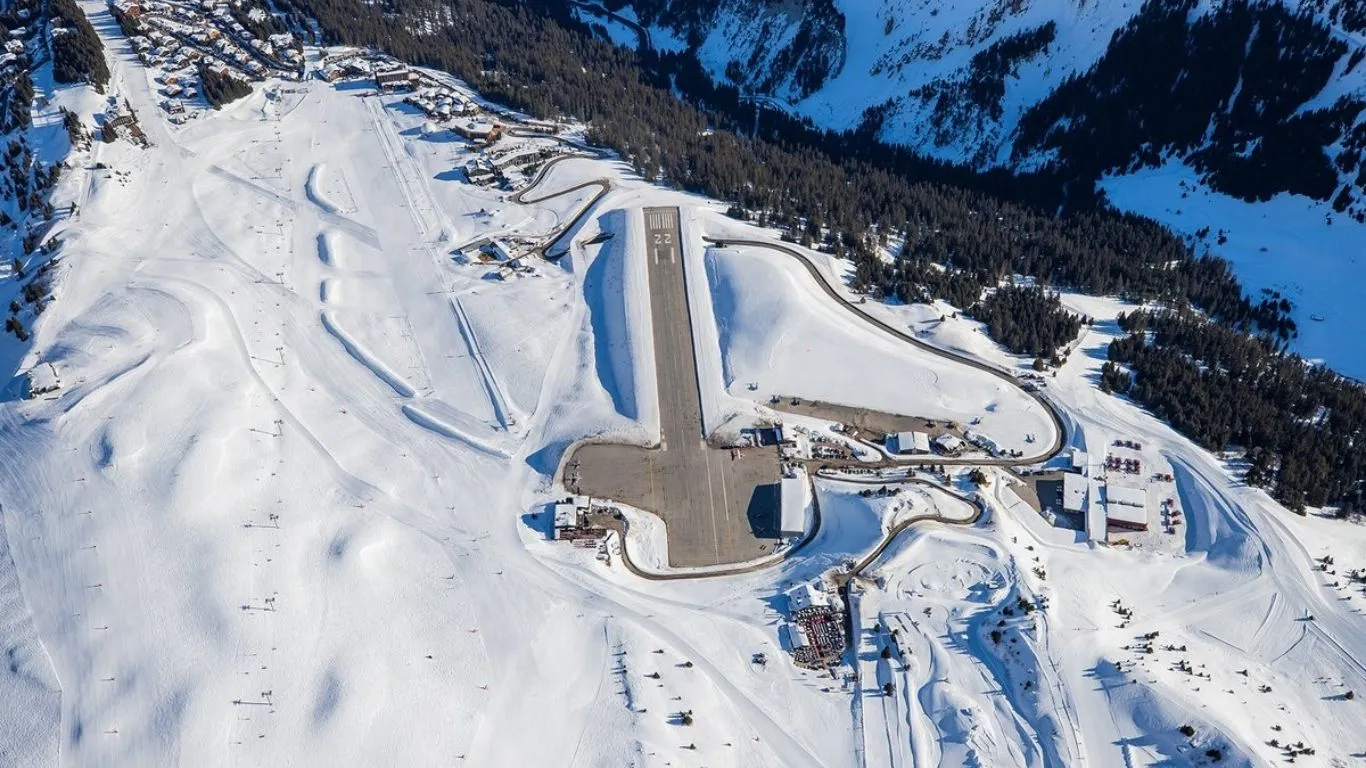
Ce n'est pas le cas dans la pratique. L'altiport est réservé à un petit nombre d'avions à turbopropulseurs certifiés, pilotés par des équipages titulaires d'une qualification « montagne », et la distance d'atterrissage requise pour les vols charter commerciaux, calculée en fonction de divers facteurs, rend la piste de 537 m inaccessible à la plupart des opérateurs. Les clients se rendant à Courchevel atterrissent à Chambéry, Genève ou Lyon, puis effectuent le transfert en hélicoptère ou par la route.
Rédigé par Alex Peake
, directeur des charters chez Global Charter